
Introduction
SEO is not just about keywords and backlinks. The way your website pages are connected also plays an important role.
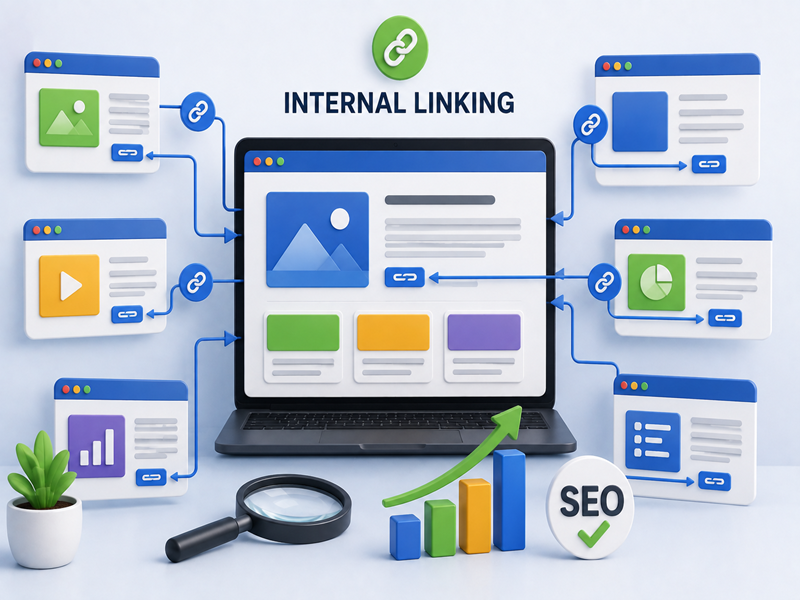
Internal linking means linking one page of your website to another relevant page. It helps visitors discover useful content and helps search engines understand your website structure.
At Extensile Media, the best digital marketing agency in Hadapsar, we use practical SEO strategies to improve website visibility and user experience.
What Is Internal Linking?
An internal link connects two pages on the same website.
For example:
SEO Blog → SEO Services → Contact Page
Internal links can be added to:
- Blog posts
- Service pages
- Product pages
- Landing pages
How Internal Linking Helps SEO
1. Helps Search Engines Discover Pages
Internal links make it easier for search engines to find and understand important pages on your website.
2. Improves Website Navigation
Relevant links help visitors move easily from one topic to another without having to search for information.
3. Connects Related Content
Linking related articles helps search engines understand the relationship between different topics.
For example:
SEO → Local SEO → Keyword Research → On-Page SEO
4. Supports Important Pages
You can link from high-value blog posts to important service or landing pages. This can help guide both search engines and visitors toward key pages.
5. Supports Lead Generation
Internal links can guide visitors through a simple journey:
Blog → Service Page → Contact → Lead
This makes internal linking useful for both SEO and conversions.
Best Practices for Internal Linking
- Link only to relevant pages.
- Use descriptive anchor text.
- Avoid adding too many links.
- Fix broken internal links.
- Link older blogs to newer relevant content.
- Give important service pages enough internal links.
Avoid using generic anchor text such as “Click Here” when a more descriptive phrase can explain the linked page.
Common Mistakes
Some businesses:
- Add too many internal links.
- Link unrelated pages.
- Link only to the homepage.
- Ignore older content.
- Leave important pages isolated.
Internal linking should always improve the user’s experience rather than make content look forced.
Conclusion
Internal linking is a simple but effective SEO practice. It helps search engines discover your pages, improves navigation, connects related content, and can guide visitors toward conversion pages.
Create useful content, connect relevant pages, and make it easy for visitors to find what they need.
Extensile Media, the best digital marketing agency in Hadapsar, helps businesses develop SEO strategies focused on visibility, content, website structure, and sustainable growth.